The Rabbits Are Us: thoughts on 2016


IV

our touching hearts slenderly comprehend
(clinging as fingers,loving one another
gradually into hands)and bend
into the huge disaster of the year:

like this most early single star which tugs

weakly at twilight,caught in thickening fear
our slightly fingering spirits starve and smother;
until autum abruptly wholly hugs

our dying silent minds,which hand in hand
at some window try to understand
the
(through pale miles of perishing air,haunted
with huddling infinite wishless melancholy,
suddenly looming)accurate undaunted

moon’s bright third tumbling slowly

eecummings


Perhaps we should have known, when the January opened with the death of David Bowie, swiftly followed by the death of Alan Rickman, that this year was going to test faith in heroes and in possibility. Like the dolphins fleeing the doomed Earth in So Long and Thanks for All the Fish, they were the canaries in the collapsing mine of 2016.¹ In April they were joined by Prince, and people blamed the year itself, as though it were sentient, and angry with us for some unknown reason. As though we had messed it up.

I could say this accounts for the terrible presentiment I had before the Brexit vote, and again before the American presidential election, that the shared rhetoric of hate and division would triumph. I had a funny feeling in my toe: a feeling of blood creeping over the fields. The rabbits are us

I don’t normally write a yearly review. Who wants to know what I thought about the year? But this year is exceptional. Many people seem to be finding the events of 2016 hard to process. I process things by writing about them, so forgive me if my thoughts are half-formed or reaching without conclusion.

Viewers of the US sitcom Community will be familiar with the terms darkest timeline and gas leak year.


Both scenarios – for very different reasons (parallel world/chaos theory and the sacking of the series creator as showrunner for season 4) – result in people acting out of character in horrible, humiliating, destructive ways, and in events running out of control as a consequence.


2016 seems a convergence of both gasleak and darkest timeline. After the American election, I saw a number of memes referring to the darkest timeline, and to the time-travel narratives being evoked by Community. I saw tweets that blamed Barry Allen (currently messing up his own Earth in season three of The Flash) or called on Keira Cameron of Continuum to try and correct things (which never goes well, I should say). Many referenced the capitalist dystopia of Back to the Future II, not least because Biff was based on Trump.

The week that Trump took the White House, the salt in the wound for many was the death of Leonard Cohen. Two men who couldn’t seem more averse. Like many, I have felt this year that we are losing our wisest elders: those who can point to the crack the light will still come through, when all we find is darkness, and the death hour rounding it.

The year closed has closed with another spate of losses – George Michael, Richard Adams, Carrie Fisher, and then her mother, Debbie Reynolds. People who seem to have taught generations how to think, feel, believe in themselves, express themselves.

Perhaps the folly is hanging so much on so few. We need new heroes; new cultural leaders to show us a model of an inclusive, nurturing world, in which people of all backgrounds, abilities, ethnicities, genders and sexual orientations can thrive.

In the aftermath of Trump’s unthinkable triumph, people seemed to turn to the literary world,  particularly to poetry, to show them another way.  Two days after Trump was elected, we had our annual poetry month at Grasmere Book Group, and read, amongst others, the poem that opens this post. The group had chosen ‘love poems’ as a theme, to contrast with last years’ ‘war poems’, but as I tried to pick a selection for us to read I was finding it hard to think about celebrating love. The group helped remind me that this is one of the few things we can all do in times of darkness and hate: love well.

Meanwhile in the Canadian Literary world another darkest timeline was erupting, one in which authors normally associated with voicing the margins grouped together to support a creative writing professor over the students who had made complaints about his conduct. 

The writers involved claim only to be calling for ‘due process’ for the accused, but their letter, and the associated website, failed to mention the right of the complainants to due process, or a fair hearing, or for their experiences not to being automatically discounted by their seniors in the literary community. I was dismayed to read the names of many writers I admire deeply on that list; relieved to find some people reassessing their position and removing their names as the weeks went by; appalled to see some adding their names to the list instead. For writers – people who make their living and their lives not just out of words, but out of nuance and context and close reading – this letter showed at best a lack of attention to detail. Its language, tone and omissions wilfully misunderstood power dynamics and how words contribute to rape culture. It also made me think more highly of the role of editors in Canlit, if so many great writers could not see their own omissions and errors. Most of all, I was disappointed then horrified to see Margaret Atwood backing herself further and further into an untenable defensive position, in which she needlessly brought up the notion that ‘women lie’. 

Other responses from Canlit stalwarts were heartening, and show the kind of careful reading and thinking we expect of great writers (Maggie Helwig, Michael Redhill and Laurence Hill’s responses stood out for me in the first wave). As the year closes, the controversy is still raging, and has most recently evolved into a public questioning of Boyden’s claims to indigeneity, after Galloway’s  own apparent indigenous heritage was pulled out by his supporters to count in his favour. Boyden’s self-presentation as indigenous has been long queried by indigenous writers and communities, but I doubt this would have kicked off now if it were not for his part in the Galloway debacle, and what it revealed about how little he seems to understand gender relations and power dynamics on (or off) campus.

This call for justice gone horribly wrong played out in eerie parallel with Trump’s calls for apologies from the cast of Hamilton the same week.

These are times we all need to stop and ask ourselves if we’ve become our evil alteregos. If this is the darkest and most terrible timeline, and if so, if we are the baddies.

More importantly, even if we think we’re on the side of the good, are we doing enough to help those around us? Are we doing enough to protect the vulnerable in our communities? A positive result of this Canlit meltdown might be a much needed reassessment of some aspects of the teaching of writing, and of what is or is not acceptable behaviour in the mentor-guru focussed system we have. This is not, obviously, just a Canadian problem: anywhere we follow this model of ‘apprenticeship’ there is room for abuse, and far too much of it happening. As a teacher myself I am keenly aware of this, and of what my role may or may not be in preparing my students for the writing world outside university.

Some things much closer to home this year have also made me mull over how power is accumulated in the literary world, and how often this means hurting or exploiting others. It shouldn’t do, of course. And needn’t. This should go without saying, but some people seem to need it said over and over again, because they’re not listening. They think what their behaviour is fine because poetry demands it, or everyone else is doing it, or the same thing was done to them. The best writers I know are also the most generous, the most thoughtful, the kindest. It can be hard to be one’s better self in a world that can so easily descend into bitchy competitiveness, but we owe it to ourselves and each other to try.

Whenever I think of embittered, jealous, power-hungry writers, I think of them as having gone to the dark side of the force. Star Wars was one of the key texts of my childhood. I must have watched the original trilogy hundreds of times before the age of ten. As with Watership Down, I could quote huge chunks even now (anyone who knows how bad my memory is, knows how much that means).We collected Star Wars figures and toys, and spent many happy hours staging spaceship crashes and battles at the top of the garden.

Poets are much like Jedis – few people believe in them. The system of mentorship between Jedis forms a helpful parallel to that same model in creative writing, and a way for thinking about how we handle it from either direction. Those times I have found myself wavering towards the dark side – starting to resent other writers for their successes or blaming their successes for my failures – it is Star Wars that has kept me honest.

2016 has gone beyond satire, beyond science-fiction. If only there were a way to redo or unwrite the wrongs done, the wrong-turns taken, the misrepresentations, false steps, and time-line changing bad decisions. As yet, we cannot repilot life.

In the meantime, we have to learn to live better with what we have. Grieve for what you have lost, but don’t let grief turn you away from life. Be good to one another, and not just those you are already invested in and identify with. May the force be with you.


  1. I won’t go through the full list of cultural heroes who have died this year. I mention in this post those who mean the most to me personally, and this is no slight on those I do not mention. More importantly, this has also been a year of massive humanitarian disasters, and widespread loss of life, particularly during the ‘refugee crisis’ and in Syria. There is something gross about focussing on so few, relatively privileged people over so many, but I suppose it is about impact: we grieve for those we think we know. Maybe this means we need to do more to know more; to care more.
  2. I wrote the main part of this post at the end of November, and had no idea at the time that this mention of Watership Down, which is so often in my thoughts, would become so poignant.

Calling the moon

And if my smile seems straight as the Tropic of Cancer, it’s because
nature isn’t magic, it’s just a mystery to us …

case/lang/veirs
‘Supermoon’

p1160699


It’s a bit cloudy round here, which isn’t just a metaphor for the dark and stormy times we find ourselves in. I got some beautiful views of the waxing moon last week, but over the weekend it has been hidden behind a grim drizzle. Again, not just a metaphor. In lieu of an actual supermoon, for others who may not be able to see it, here is a poetrymoon:


Moon Salutation


This is what you came home for, you

and the mountain and the forest and the stars in the dark


and the moon, half a blink from full,

low, white and cool as the eye


of a jackdaw in the feathered night. You move

slowly at first, where the trees block the light.


The wood expands, contracts you down

the gallery of its ribs. Your breath is a tight


hiss in your ears, strange as the voices

you catch spilling up from the village, mixed


with hoots of an owl, the crunch of boots

on leafmeal and gravel. The open is silvered,


fixed in reverse – a daguerreotype portrait.

You stop at each curve of the path and stare.


The valleys drown under floods of fluorescing

cloud. The high ground glints and shifts.


Noises rise like sounds above surface

heard under water, distorted – a shout –


a motorbike’s revs as the church clock strikes

midnight. You count the chimes, climb


far out at sea, dreaming land

from the ghost of a ship’s bell tolling. Scared


of falling, but more of sinking. You keep

pushing uphill. Your bare arms shine


like armour. You are a crescent, waxing.

A few feet further, half an hour longer,


and you’ll be complete: a perfect mirror,

spheroid and luminous, reflecting everything,


unable to go back, ever.


From my forthcoming collection Basic Nest Architecture. An earlier version appeared in Flax 018: The Crowd Without.


And for those who prefer their moon singing, a few highlights from my ‘moon’ playlist:

img_0588


img_5019

Words, pictures, music.


‘If I puked up some sonnets

would you call me a miracle?’

Neko Case, ‘Night Still Comes’

I’m trying to unravel something about how I feel, and what I think, about the relationship between poetry and song. About my relationships with poetry and song.

I’ve been thinking about it a lot over the last month or so, but suddenly it seems everyone else is too, because Bob Dylan has just been granted the Nobel Prize for Literature. The prize committee praised him “for having created new poetic expressions within the great American song tradition”.

This has initiated a lot of chatter about what is and isn’t poetry, and what that might have to do with music.

Why am I troubling over this now? Partly – mostly? – because I’ve been working on the final edits of my first collection. So many of the poems in it are linked in my mind with particular songs that I’ve made a playlist to go with it – a song for every poem. I like to make playlists for different occasions, with the rule that the songs have to already be in my library. I make them for visiting particular places, for particular seasons or journeys or events. Last year, for instance, I collected every song I owned which featured wolves, werewolves, shapeshifting or the moon, to play as I drove to a conference on Werewolves. The playlist was over three hours long. I began to notice wolves skulking in the background of songs I had never seen them in before. Songs help me think about what I think and feel about something, whether it’s a personal issue, or a creative or professional one. I have poems named after songs, and poems that couldn’t have been written without particular songs. Even choosing which poems might have to be jettisoned from the collection in editing, I thought of a particular song: a live version of Tori Amos’ ‘Honey’ I had on a bootlegged tape of The Bee-Sides. She introduces it by explaining how it was meant to be on Under the Pink, but got ‘kicked off in […] mastering’. ‘Honey’ was one of my favourites too. I worry about looking back and thinking ‘why did I let her get kicked off?’

It’s no coincidence that poets are always writing about music, and songwriters are always writing about literature. I could make a playlist of songs about writing and of songs which mention authors and of songs which mention fictional characters and have hours to listen to. We all – I think – know something of the long history of poetry and story as song, and how relatively recent any real notion of separation between them is.

But I need to work out what that means to me, not to the history of literature.

I have peculiarly vivid memories of watching the BBC schools programme Words and Pictures when I was three or four. I particularly liked Funny Bones, but I loved the general combination of images, rhyming and lyric storytelling, and song in the episodes. Both music and books were very present and important in our household, but Words and Pictures was an introduction to literacy outside the home, to a wider world of words and pictures and music working together that fed back into what I heard at home. Bearing in mind that I was speaking my own self-invented language at the time that I would sit and watch this show,¹ its presentation of literature as a lively, performed thing, and the relationship of the library hub to the outside and imagined spaces of the stories, was very formative. They even encouraged you to make your own words up.

As soon as I learnt to write I was writing poems, but I was also writing songs and tunes. Words and music were still and always wrapped around each other. I recently found some manuscript paper with a tune I wrote named ‘Tehanu’ after the fourth of Ursula Le Guin’s Earthsea novels. It’s not a very interesting piece of music of course, but that’s not what I’m trying to get to.

IMG_6334.jpg
That difficult stage before you can reach the pedals.

Growing up, our household’s taste in music was as eccentric and contradictory as my family members. It loved classic Hollywood musicals and Leonard Cohen, Glenn Miller and Queen, Ella Fitzgerald and Tanita Tikaram, The Kinks and T’Pau, James Taylor and Julie London, The Carpenters and Don McLean, Diana Ross and Simon and Garfunkel. I read my way through books of border ballads, the Oxford Children’s Poetry, The Child’s Garden of Verses, Revolting Rhymes, various anthologies of Great Poems, Spike Milligan, McGonagall and Verse and Worse, whilst my older brothers taught me to love Pearl Jam and Metallica and Bowie and Tori Amos and Extreme and Pink Floyd and Kate Bush and War of the Worlds and The Pet Shop Boys and Edie Brickell and the New Bohemians.

The summer of 1992 will be forever linked for me with Metallica’s Black Album, because of a tape my middle brother made of it which included the Guns n’Roses version of ‘Knockin’ on Heaven’s Door’, and The Soupdragons’ ‘Softly’. My best friend came on holiday with me and my parents that year, and the tape became the soundtrack to our travels, and muddled up in our minds with two novels we were obsessing over  – one about a vampire with a soul (The Silver Kiss) and one about someone who fed off other people’s youth (Personal Effects – I can’t trace this, but the main character was doing an Art Foundation which completely sold me on the idea, despite the fact she almost got sucked dry because she was just so cool). We listened to that tape until we knew every word, every chord, every beat. I began to grow my own collection of tapes based from songs I heard on the radio or saw on TV or that friends told me to listen to – Nirvana, PJ Harvey, 4 Non-BlondesTasmin Archer, The Cranberries, The Stone Roses, then Hole, Heather Nova, Radiohead, R.E.M, James, The Smiths … easing into the mid-nineties indie and Britpop years of Elastica, Echobelly, The Verve, The Cranberries, Pulp, The Wannadies, Blur and Oasis, Catatonia, Gene, Ash, Portishead, Mazzy Star, Ash, Supergrass, Massive Attack … more more more. All great storytellers in their different ways.

I didn’t really know then that contemporary poets existed, let alone that if I read a poem I liked, I could find a whole book by that same person, or that I might be able to hear them read aloud. As much as I loved poetry, I didn’t know of the world of poetry or how to access it. I did know how to access music. Music was my contemporary lyric. My poets were dead, my music was living. Sometimes the music even told me about poets. The Bluetones introduced me to Adrian Mitchell’s poem ‘Celia Celia’; The Verve to Blake’s ‘London’.

Music taught me about the world. It taught me about war and social injustice and global history and racism and feminism. It taught me how to negotiate being a girl and a woman in an often hostile environment. It taught me about joy and despair, and singing through them both.

So it’s no surprise that many of my teenage poems began as songs, or songs began as poems. Weird songs with weird lyrics. Poems which might have made more sense with music. By the time I was in lower sixth, I’d developed quite a collection of songs, and even started to record a few before I dislocated my knee and broke my elbow, putting me out of musical action, and setting me back at school. I never managed to go back and finish recording those songs, and I sometimes wonder what would have happened if I had.

After that, I felt I didn’t have the stamina to pursue music, or much at all for that matter. I found more and more I was turning to poetry to try and make sense of what I was feeling, and the incomprehensibility of my recalcitrant undiagnosable body. When everything else seemed physically impossible, I could still write broken lines.

The last time I wrote a song was in 2009. I wrote a few that year. It refers to a number of traditional ballads, Alasdair Roberts’ Polly songs, and an Emily Dickinson poem. There’s nothing deliberate in the fact I haven’t written a song since, it’s just worked out that way. Where a song comes from is as mysterious to me as where a poem comes from. Both are more likely to arise under the right conditions and with practice though. I am very aware that I don’t play as much as I used to, or rather that I play less now that I ever have, and I wonder what that might mean, for my writing and more widely. I also think whether I feel like playing and singing is a kind of measure of health. Still, our tiny living room is dominated by my piano, which was my gift to myself when I moved out of London ten years ago. I had spent seven years dreaming about discovering an extra room in the house with a piano in it and perfect acoustics, and vowed never to live without one again. A house is not a home without a piano squashed uncomfortably into it.

IMG_1098.jpg
My piano. Not my cat.

In an overly lengthy way, what I’m trying to explain, is that (as for many poets) for me poetry and song aren’t just linked metaphorically, or historically, but very tangibly and practically.

I have used songs in my creative writing classes to make exactly this point, from variations on ‘The Silver Dagger’ (including Hey Rosetta’s lovely version of ‘Who is at my window weeping’  and Martha Tilston’s deceptively simple cover) to talk about the fluidity of ballad narratives, to using songs by Bonnie Tyler and Dar Williams to open discussion about gender awareness in childhood.

So why have I found myself feeling disappointed that Bob Dylan was granted the Nobel Prize for Literature, instead of elated, or vindicated? Am I a literary snob, or elitist, as some are accusing the nay-sayers of being? Quite possibly. I can’t shake a conviction that Dylan is just not a poet. I write this as lover of many of Dylan’s songs. I think many of his lyrics are brilliant. I know his songs have been incredibly important to many people, not just generally, socially, but specifically to some of the songwriters and writers I most admire, and who have been most important to me. I’m questioning my own bad feeling. My feeling that this is not the inclusive move it is meant to be.  I wonder if it has more to do with the men who have tried to convince me over the years that Dylan is a poet, than with Dylan himself. I wonder if it has to do with how riled I get by the continual comparisons between Dylan and Leonard Cohen, who is unequivocally a poet and a novelist as well as a songwriter  (and whose music I happen to have a much deeper and longer connection to). Is it that I think one of the best things about ‘Blowin’ in the Wind’ is that it made Sam Cooke write ‘A Change is Gonna Come’? Is it that I sometimes prefer Dylan’s songs when other people sing them? I would listen to Joan Baez sing ‘Sad-eyed Lady of the Lowlands’ all day. Surely this should actually count for the quality of the writing, not against? It speaks of wider influence, of seismic change. Am I just being pedantic? Very possibly. Is it generational/formational? Many of the people I know, and have read about, who have been really delighted by the choice grew up with Dylan in a way I didn’t, either because they were teens in the 60s, or because Dylan was a part of their later household in a way he wasn’t in mine, as Simon Armitage has also found.

Partly I think what I’ve been reacting against is the reaction, as well as a sense that this radical choice is just not radical enough for 2016. The world already knows the work of Bob Dylan – what about highlighting the work of someone they’ve never heard of, or a kind of work they’ve never given a moment’s thought to? On a very basic practical level, there are many more opportunities for a musician of Dylan’s standing than for a poet. Is this important? Maybe. Does it come down to access to audience and livelihood? As others have said, I wouldn’t think twice about the aptness if it a culture prize, but there are more worthy (and necessary) candidates for such a prominent literature prize.

Then, don’t we always think this? Don’t we nearly always have a conviction, especially with the big prizes, that we could pick a far worthier winner ourselves? I’d be just as disappointed if Don DeLillo had won. The only difference would be that the writing world wouldn’t be having quite such a great enormous row about it.

Great songs create whole worlds in their narrow bounds just as great poems, stories and novels do. They live in and grow in your mind and memory. But music is a vital part of their world-building. A song is a complete text. I often say a poem on the page can be like a tune in manuscript, the white space and punctuation telling you how it sounds when you play it through the instrument of your voice, but this is only one story about poetry. It does speak of a difference between poetry and music though. A poem’s music has to be there in the words in the voice and the white space and the breath. A song needs actual music. Giving Dylan a literature prize under these terms seems almost to negate the complex communicative power of music itself. I have a particular soft-spot for lyrics that foreground the failure of words to express feelings or experiences. The shoop shoops and uh huh oh yeahs. One of the many moments that delight me in Neko Case’s last solo album is when she breaks down into ‘blah blah blah, blah blah blah, they talk about, oh oh’ in ‘Calling Cards’ Jenn Grant and Joel Plaskett (who feature heavily amognst my top played Canadians) are both excellent lyricists, but are also especially good at knowing when to employ the oh oh oh or la la la. As is Dylan, though. Maybe even making this separation argument is spurious, and nothing to do with the rationale behind the prize. Maybe it just becomes an easy way to justify either side of the debate.

I hate choosing between things I love. I can’t make lists of favourites, because they end up too long, and I worry about omitting something important.² I refused to choose between Blur and Oasis as a teenager, and could never choose between The Stones and The Beatles. I reject reductive binaries in every other area of my life and I reject them here too. I refuse to be cornered into pretending to choose between words and music. I want poetry and song. I want lots of them. I want them everywhere. I want the whole world to find it as impossible as I do to choose one over the other.  And this is why I’ve decided to be glad Dylan won the prize, if only for what else this might make possible in the future.

Neko Case for literature laureate! John K Sampson! Laura Veirs! Basia Bulat! Dar Williams! Florence Welch! Thea Gilmore! What about Beyonce? Maybe she and Warsan Shire could get a joint prize?

I’m picking from my own playlists here, but aren’t you?

I could list pretty much every songwriter in those playlists though, because in their different ways, they’re all extraordinary lyricists and storytellers.

I’ll finish as I started, with a quote about writing from a song:

‘You see I’ve got this theory/that it’s only punctuation/that separates the list from you to me/and you can have your little war/of full stops and erotemes/but the real power’s in parentheses’.

Thea Gilmore, ‘Punctuation’.

Of course, Thea’s singing about good and evil, not literature and music. But the point still stands.


  1. True. Unexplained. Probably explains a lot.
  2. I’m trying my best not to keep coming in an adding more songs and bands as I realise I’ve forgotten something vital but …

All the messages received in my sleep

This site is named Shadow Dispatches, the same phrase that gave the title to my second pamphlet. It comes from the below poem, ‘Somnography’ (a word I kind of made up: literally sleep writing) which talks about messages or emails that definitely exist during the night but disappear somehow before dawn. It was once filed under a line from a scene in the film The Science of Sleep featuring a dream message (‘Your neighbour, a liar’).

I called the pamphlet Shadow Dispatches partly because it seemed a way to talk about a B-side-ish nature of the poems included: lots had been placed in competitions, but few really had public lives or readers. They were out there, but not out there. Putting them together in the pamphlet was a way to try to address this, but the title was a nod to the notion that they, like the dream messages, might not get through.

Today is National Poetry Day, and the theme this year is messages, so this seemed like a good time to throw this poem back out into the ether, and see what sticks.


Somnography


Early this morning I got your note.

I can’t recall the words or meaning,


only the light oblique on the screen

and how it made it feel, certain


transmission was real. I could recite

all the messages received in my sleep


which days have tried to prove imagined,

and one correspondence aborted mid-sentence


which sent itself nevertheless, as though

the content refused erasure, arriving


complete through the ether. We dare not believe

these shadow dispatches: corrupted, wishful,


impossible to delete. The same way sheets

I never strung to dry at a window


still fill the room with sails long after

I’ve moved, and how I’m still reading a letter


a man never sent, though I could repeat it

verbatim, clear as the sun through the linen,


billowing yellow and sweet as the wedge

that lit your words I can’t remember,


or that email which backspaced even as I scrolled

down the face of the dream computer.

Worst/Best/To The Moon

img_5252

For the academically-attuned, there is more than one start to the year, and perhaps that which begins sometimes between early September and early October is the more poignant, and evocative. So instead of reflecting on my year in January – which I didn’t feel able to do this year – I’m doing it now.

I’ve written before about how this time of year now always makes me think of Dar William’s song ‘End of the Summer’. The song perfectly captures for me the doubleness of this time of year – the nervous excitement of something new beginning with the new school year, and the slightly ineffable sadness that goes with it. A long time ago I wrote a pretty bad poem about this, about how whilst I always feel better in the summer (a simple prescription of long bright days, swimming outdoors, more time Just Being) I love melancholy autumn: the first woodsmoke; the first frost; the long yellow light. At times I have feared it too though, knowing that I’ve barely crawled through the kinder months, certain that winter will push me under.

In ‘The End of The Summer’, Autumn is both the time we ‘push ourselves ahead’, and the time ‘when you send your children to the moon’. The two are one and the same. The singer dreams of being sent to the moon instead of school. She knows she will crash, in that way we do in dreams, but she doesn’t want to tell her family, and disrupt the preparations and the routine of starting that process of pushing ahead. She sings that she doesn’t tell them because ‘there’s just some moments when your family makes sense’. What does this mean? That to admit the coming catastrophe breaks the sense? That she wants them to have this last morning to remember, intact, without the foreknowledge ruining the comfortable dailyness? That she knows they can’t do any more for her now, than help her put her sweater on in this dream of childhood? In some ways this is a song about accepting that we always have ‘to learn again’, no matter how far we think we have moved beyond schooling.

I have been doing a lot of learning again this year. Learning what I am, more than who I am, and how to live without crashing. I haven’t written much about this year, or the latter parts of last year. It’s been a difficult time in many ways, and it hasn’t seemed right to me to share too much of it before I was able to digest it a bit.

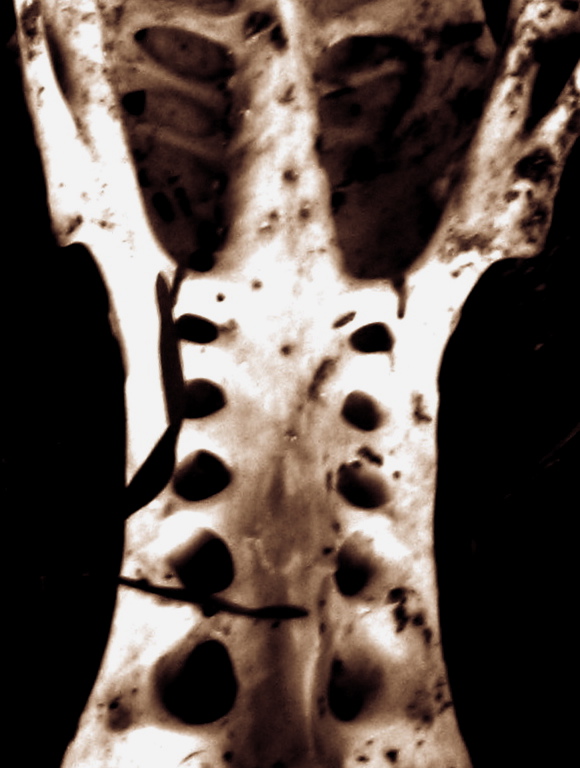
Starting venesection in January (the letting of blood to reduce iron levels) put an enormous strain on me, when I was already at the brink of functionality. Unlike many people with Haemochromatosis, I only have my pint of blood taken monthly, but the combination of Haemochromatosis and EDS, with its complications of autonomic dysfunction, meant I lost at least a week a month recovering from the loss, if not more. Since my second venesection, I have a saline drip at the same time as the blood comes out, balancing my blood volume out a bit. This is because my first one at the end of January completely threw me off balance. It felt like all the hard work I’d been doing to manage my Postural Tachycardia symptoms had been undone in an hour. For the next two weeks I was stottering around in a state of dizzy confusion. I was even dizzy sitting down. At the end of the first week, I went to the hospital on the advice of my GP, and they basically shrugged. My haemoglobin levels were fine, and they couldn’t see any obvious reason for my symptoms. In the end, I rang the Autonomic Clinic at Queen’s Square, who diagnose EDS-related dysautonomia, and they suggested the saline drip. It’s certainly helped, but my post-venesection hangovers are still pretty vile, and unpredictable. Sometimes they just take up one day after the bleed, sometimes, as with this month, they lie dormant for a couple of days, then lay me flat (literally) for a week. In that first dizzy fortnight I hurt my left foot badly walking across campus between classes. This week I finally had an MRI to see whether the damage to my fifth metatarsal is bony or ligamental. My money is on bony, but we’ll see.

All this would not be quite so taxing on my body if I weren’t also working full time. I saw Occupational Health this time last year, who suggested a reduction in hours, which for various reasons didn’t happen last year. I pushed through, because that’s what I’ve always done, have been taught to do, have had to do, but by March there was nothing left to push with. I’ve had a lot of problems with particularly bad muscle cramps since starting venesection, which no one can really explain (I have theories about volume loss + electrolyte and mineral loss + extra physical strain = boom, but). In March I was sitting at my desk marking online, when something in my neck made a sickening crunch. I already had a bit of a head and neck ache, but it began to get worse. I thought I might not make it through my classes the next day, but carried on, holding my head up with my hands, which was the only way to make the pain almost bearable. By the time I got off the train back to Cumbria that evening, I couldn’t really stand up anymore (with the wonderful synchronicity of the world the man sitting opposite me on the train knew about EDS because of a tragically too-late diagnosis in his family, and we had a great conversation through the pain). The next day I took myself to the GP by inching through the car park to the bus stop, and stopping to rest my head in my hands when I couldn’t go further. If I supported my head, I was almost okay. If I let it go, within seconds the pain was so excruciating I couldn’t think at all anymore. Over the course of the next days, I counted it. 52 seconds to wailing insensibility.

On the bus, I held my head between my knees and tried to focus on my breathing. At the GP I saw someone who didn’t know my conditions too well, and thought I’d pulled a muscle, and prescribed some anti-inflammatories. I went home hopeful, but they didn’t work. By this time, I could only lie on my right hand side without crying. These things of course never happen at a ‘good time’, as though there is one, and this was a week I was doing both first year lectures, as well as my usual classes. I had to miss the first lecture, and some classes, but this seemed to cause all sorts of chaos and disapprobation, so I travelled up to Glasgow on the Friday to give the second lecture. I gave it with my head propped in my hands, and managed the train journey by lying on a table with my head turned to the right. Needless to say, this didn’t help, and by Monday I’d realised the drugs weren’t working at all, and had started to get a bit scared. In the hospital, they got a bit scared too, and did a CT to check for vascular insufficiency before deciding it was, indeed, only a massive muscle spasm. This took 12 hours, of course, because I got forgotten about mid-evening. We arrived home in the pre-dawn, but with muscle relaxants, and helpful advice from a rheumatologist who actually knew about EDS.

The big revelation of this episode – apart from some serious issues around how my workplace has no contingency for illness – was that the CT showed nodules on my thyroid. Nodules in a stage of recovery, which no one now seems worried about, but all that time back in 2009/10/11 when I was certain there was a lump in my throat and couldn’t get anyone to do a scan? Well, there was. Who looks stupid now?

It took a good four weeks for my neck spasm to slowly ease off, which really messed up the end of term. I hate missing work, and the thought that I was letting my students down, and that my colleagues were unhappy and stressed too, was not helping. I was also worried about taking three weeks out, after this, to go on the Stanmore Joint Pain Rehab Course, which I wrote about previously. As it turned out, the course was exactly where I needed to be to help me not only manage my physical symptoms better, but learn to deal with the guilt and pressure around work in a more helpful way. I feel more able now to say no to things I know will add too much strain to me, and to ask for help when I need it. I also have a much clearer idea of what I need to set in place to make things better for me in the future.

img_2235

This year, most of that help is coming in the form of a reduced work load. I’m not saying I don’t feel guilty about this, but I feel far more circumspect about it than I would have done a year ago, or more. If it makes me more useful – to everyone, including myself – then it has to be a good thing. There is a lot I could write about how insidiously ableist Academia is, and how watching healthy peers making themselves ill to try and progress  or just meet minimum requirements does not inspire me with confidence that there is a place for anyone with a chronic condition in the current system (many other people have written much more about this). All institutions are not equal of course, and some are better or worse at making accommodations (as they must do by law), but this does not change the basic conditions for employment and progression for early career researchers being stacked against anyone who does not have superhuman stamina. Aside from the barriers facing students with disabilities to get to post-grad level, I have watched many wonderful teachers and researchers drop out of academia because they were no longer willing to sacrifice whatever part of their life they were having to set aside to try and succeed. The problem is that this continues to reproduce a working environment which is unsustainable and hostile to most people. I don’t know at the moment what my future in academia will be (and I very much still hope to have one), but I am very clear that I cannot continue as I have been the last few years.

Despite all this – the physical and emotional toll of the year, the questions it has raised about how I live now and how I can move forward – it has also been threaded through with wonderful things, and great days.

Much of the Stanmore course was focused on helping each one of us to live a fuller life, whatever that meant to each of us. This means working with any limitations, and not against them. Over the last few years, I’ve been in an untenable pattern of work and collapse, with very little space for any actual living. My main goal for this year is to tip the balance towards living. It’s a trial and error thing, and I’m definitely a learner. I still have a tendency – after a life-time of practice – to push myself too far on the good days, and try and push through the bad days. I thought there was no other option: that if you always feel bad, you will never do anything if you don’t push on through it. This year has shown me just how much that doesn’t work.

This month, it’s ten years since I left London, and moved north to start my phd at Lancaster and the Wordsworth Trust. That was a monumental shift, but one that I didn’t really have time to think about. I often say that I moved to the Lakes by accident. One of the things I appreciated most about the changes that came with that move was the way it slowed my life down. Suddenly, the things I had to concentrate most on were reading, writing, and thinking. Then, when I actually moved to Grasmere: gathering kindling; familiarising myself with the Wordsworths’ places; discussing poetry with friends for many hours with few distractions. Thinking for me is something best done outdoors, or whilst swimming or walking, or quietly by firelight and candlelight in winter. It is a slow thing. It is a precious thing. Grasmere helped me remember this.

Through everything this year, I have been thinking a lot about how I need to live to live better. By ‘live better’ I do not mean necessarily more ethically, or more happily, or to a higher standard, although those notions are certainly involved. I certainly don’t mean more productively in the traditional economic sense, which I increasingly reject. In part I mean more healthily, but without the victim-blaming whiff of wellness culture that comes along with that. I want to do more of the things that make me feel good – happy and well – and less of the things that make me ill or feel bad. I expect most people mean to do this, but for me it has become a pressing need. If I don’t pay attention to living better, I will be living very very much worse.

In August, I had my three month review for the Stanmore course, during which we reassessed our goals with an occupational therapist. My OT noted that all of my goals were very sensible – pace work, take regular breaks from the computer, do physio, go swimming etc. – but didn’t allow for much fun. When you’re focused on keeping yourself together, enjoyment often gets left off the list. After a discussion, we added ‘going to pub on Fridays after work’ as a goal. I manage to get myself to ‘important’ events much of the time, but I miss the easy sociability of just hanging out with friends and neighbours for a few hours. It felt great to go home with a chart in my bag which listed a positive outcome as ‘going to the pub once a month’, and better than expected as ‘going to the pub every Friday’. Sociability is one of the things that falls away most often and often most quickly for people with chronic illnesses, but it is important to a sense of wellbeing and self-worth to feel part of the human world around you.

When I was first very ill as a teenager, I found simple but productive tasks really helped my state of mind. I loved making soup – there was a something very soothing about the repetitive actions of peeling and chopping, the slow sweating of the vegetables, the final outcome that felt like it was putting all that good effort back into your bones. More recently, peeling and chopping are some of the things I’ve been finding most painful, as I’ve developed more problems with the small joints of my hands, as well as my wrists (my left little finger, for example, is still not quite right after I dislocated it by whacking it on a conveyor belt at a supermarket in May). I also used to love to make jam though (we had a lot of soft fruit growing at home) and something about the high yield of berries this year has catalysed a preserving instinct.

It started with a fascination with how glorious the rowans are at the moment, then I remembered how easy it is to make jelly, and now I can’t stop. Through another episode of post-venesection spasms last week, all I could think about was fruit. I was pretty useless for most things. Once I got the right medication and it kicked in, I was in less pain, but also unable to focus well on complex tasks. I’ve learnt now to just accept these days, and do what I can.

Dosed up, and feeling far more Coleridgean than I prefer, I sat in the garden and picked stalks off berries. It was something I could do that felt meaningful and useful. All the metaphorical implications of preserving is there for a reason – when you make a bright, clear jelly, you can’t help but feel you are storing up something of the summer for those dark winter afternoons when you have nothing else left. You want to simmer things down to something really fine and strong; you want to find the spell in it that turns it into something precious; you want to keep all the light and goodness in any way you can.

I have made rowan jelly from trees in Town End and by our old house at Holly Grove, with a few windfall crab apples added in for the pectin. I have also made apple and mint jelly with apples in the Town End orchard, and mint from our garden, which is one of the many things that has grown fantastically this year. It’s not labour intensive, though I also am very aware that this is the first year in many that I’ve felt able to do anything at all like this, especially at this time of year, with new classes hovering. No doubt this is due in part to my lowering iron levels, and not just my reprogrammed patterns of activity. My bad reactions to venesection have forced me to accept just lying down and doing nothing at times when I don’t want to, and this has been an important lesson too. Sometimes doing nothing is as productive as doing everything. This could be a lesson in Being Wordsworthian, of course. I often joke about how I’m going to just lie in a ditch and look at the sky, Dorothy Wordsworth-style, but I’m only ever half-joking. They knew what they were at.

What I am learning again is how and what to prioritise. This weekend I need to work, because I lost several days to illness this week, and there are things that must be done. But there are also things that don’t need to be done. That can wait, or be delegated, or just have to be missed to allow something else to happen further down the line.

After I have written this, but before I have uploaded it, I will join our neighbours and their new baby by the lake, to chat in the September sun, and have what may be the last swim of the season. Each September swim may be the last of the season. Later still, my partner’s parents will arrive for a visit, bringing more fruit to preserve from their smallholding in Suffolk, and I will cook a stew with the some of my first, too solid rowan jelly as a base. It will be delicious, as will the swim and the sun.

Managing chronic illnesses is unpredictable. You never know when an injury or a flare up is going to scupper your best intentions. But slowing everything down makes that less likely. This is my call out for a slow life. This is my testimony to the end of the summer. Pushing ahead will mean something different from now on. Let the dark and frozen ground come. Let the crash come, if it must. All that matters for the moment is that you can spin the light to gold.