
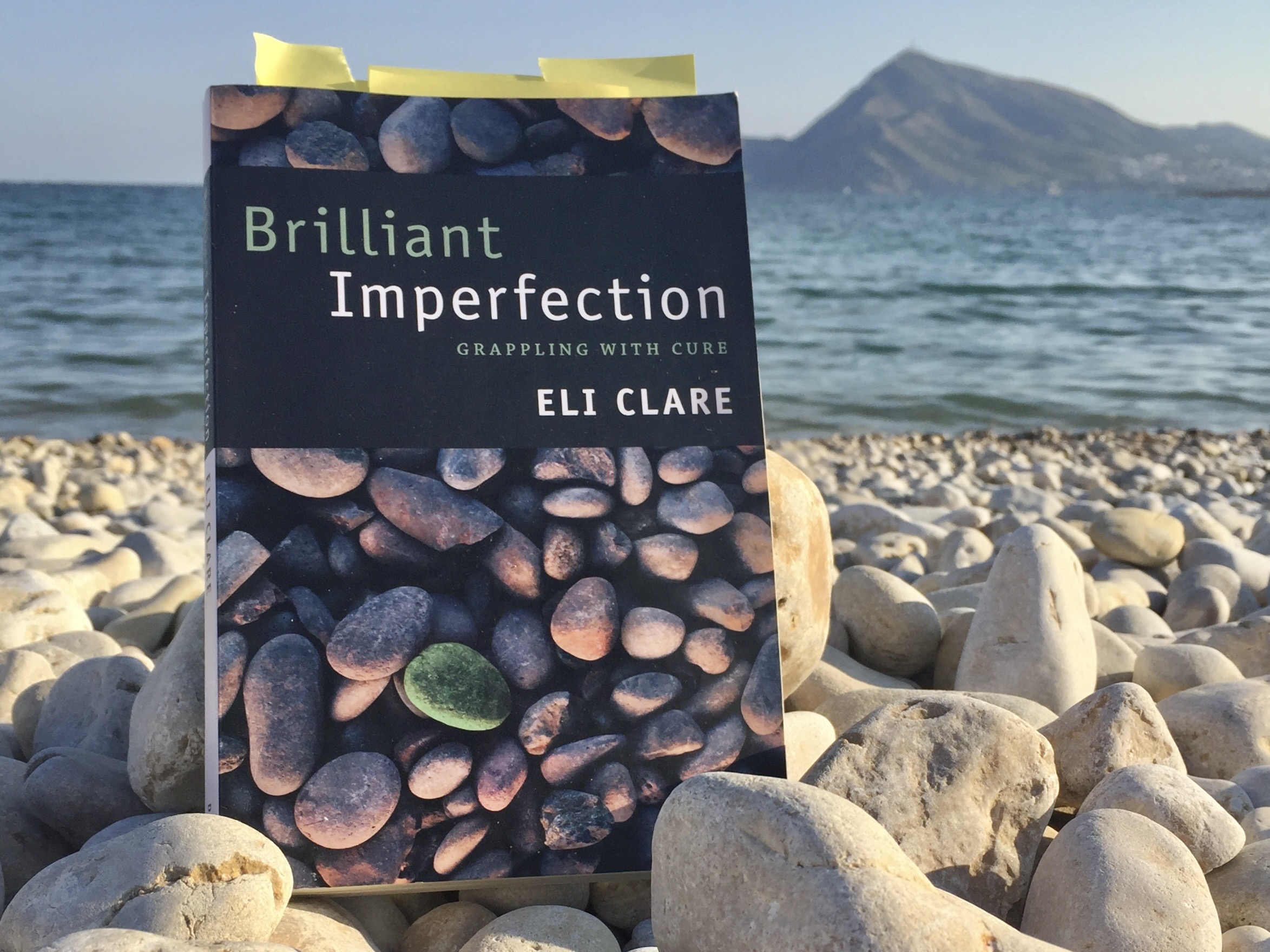
The pebbles on its cover are matched by sunlit pebbles on a beach, and there are numerous post-it notes sticking out the top.
I’ve been thinking a lot this year about citation, and the power of including others’ words alongside your own. About what happens when you have the privilege of audience, even if just for a moment, and what responsibilities we have in that. I’m always thinking about this in some way, but I’ve been thinking about it particularly as I’ve been trying and failing to complete revisions of my 2021 book Recovering Dorothy: The Hidden Life of Dorothy Wordsworth. I wanted to revise it to take into account the extraordinary research and notes in Nick Mason and Susanne Sutton’s 2025 edition of Dorothy’s Rydal Journals, as well as noting other scholarship on Dorothy that has emerged during the last five years. As a researcher working outside academia, and without access to institutional resources, it can hard to keep up-to-date, and I don’t want to miss work I should include, because I know how frustrating it can be to be overlooked. As a chronically ill writer, I’m always short of energy and feeling my way to words through the brain fog, and it’s tempting to just write what I can write, and never mind what anyone else has. Recovering Dorothy is deeply researched, but it’s not an academic work, it doesn’t need to be peer reviewed, and unlike an academic monograph or article it’s under no obligation to do a literature review. Nonetheless, it matters to me to include the work of other people, to recognise it as important and valid.
Sara Ahmed writes that ‘Citation is feminist memory’:
Citation is how we acknowledge our debt to those who came before; those who helped us find our way when the way was obscured because we deviated from the paths we were told to follow.
Sara Ahmed, Living a Feminist Life (2017)
Citation is disabled memory too. Citation is crip memory. Citation is inclusion. We need to remember each other precisely because others forget us. I’m sure I’m not the first person who has said this but I can’t find anyone else to cite. Travis Chi Wing Lau writes about the broader idea I’m grasping at here, in much more depth.
It’s not always as simple as just wanting to include others. Keeping a broad and current awareness of other writing on a subject might not always be possible. We might have limited time and capacity to read, limited memory to store what we read. Discoverability is a problem – the general low status of books about disability by disabled writers makes them harder to find, especially in the fractured social media environment we have now and the self-destruction of google under AI. Accessibility is a problem. Texts about disability by disabled writers are often still not accessible to disabled readers and writers. Only one of my books is available as an audio book, for instance, as much as I would like the others to be. Few are available in other languages. Then there are wider logisitical issues. It might not be possible to reach or access a library to borrow copies of all texts someone might need. It is likely not affordable to buy copies to spend enough unpressured time with to get to know them really well. There may be texts we simply can’t access without some kind of institutional affiliation we don’t have (hello Oxford Scholarly Editions Online and your new exclusionary rules I’m looking at you). There are so many barriers to reading as widely as we would like.
Equally, it might be beyond our capacity to think and work in this citational way. We are no doubt chronically exhausted just trying to exist and have less functional time than abled writers in similar situations, even for those of us who do not experience fatigue or brain fog. Disability admin is enough of a drain in itself.
How do we maintain the memory of disabled writers whilst living with disabled memory?
Spoiler alert: there is no hack for this revealed through a paywall. Sorry!
One of my first difficult conversations with my badly matched mentor for what became Some of Us Just Fall centred around him saying ‘memoirs don’t have notes’. The ones I read do, I thought. By the time he was scratching out quotations and scrawling NO MORE DE QUINCEY in the margins of the first full draft, it was clear he wasn’t the right editor for the kind of book I wanted to write.
From the very beginning of Some of Us Just Fall in 2015/6 I intended it to include the writers of others on illness. It was central to me, as I write in the introduction, to honour the writers who had helped me work out how to understand my life in my body, and indeed, how to live it, by citing them in my book. I wanted them to be visible to my readers, to be carried onto their shelves within my pages if they weren’t already there:
In trying to tell my story, I’ve also turned to the stories that have been important to me along the way – the other narratives of illness and disability that have changed the way I could think about my own, about my life in my body. Stories help us to communicate with others who have different experiences to our own, but they also give us a chance to find ourselves reflected back through other lives. Throughout this book I include the writing of others – of my extended chronic writing family – from books I have read that gave me that vital sense of recognition, of shared humanity, to books that helped me think through what it means to live well with disability. I couldn’t tell my story if they hadn’t told theirs.
Polly Atkin Some of Us Just Fall
One of the reasons this was so important to me is because I was finding people I spoke to about the book didn’t know the books I was talking about – many of the contemporary ones American or Canadian – most of the British ones a century or two old and mostly only read by academics. Even Woolf’s On Being Ill, ubiquitous in writing about illness now, with multiple essay collections responding to it, didn’t seem to be any better known in 2015 than when I’d written about it in my MA thesis a decade before. I began to think it was less that there is no literature of illness, more that no one remembers it’s there.
This has changed in the intervening years, and there is much more on the history of disabled writers and writing available, from essay collections to poetry anthologies to histories of disability rights (such as Rachel Charlton-Dailey’s Ramping Up Rights (2025) and David Turner’s Disability: A History of Resistance (2026)). More and more of us are recognising our predecessors as disabled, and writing about it, as I did with Dorothy Wordsworth. But as I’ve been finding myself this year, often we are working in conditions that do not encourage open conversation with other texts, especially those by our contemporaries.
For all my good intentions, I didn’t do as well as I meant to at making Some of Us Just Fall into a kind of ark of chronic life-writing. I wrote the majority of it in 2018, but it was four years before it sold. In the short time I had for editing and updating between signing the contract and submitting the final manuscript I forgot to introduce to the text some of the books published in-between that had become important to me, or covered similar ground that I wanted to recognise – particularly Abi Palmer’s Sanitorium and Josie George’s A Still Life. When I realised, too late, I made sure to reference them in talks I did about the book, in workshops and in other work that spun out from it. At that point I’d not read Alice Hattrick’s wonderful Ill Feelings, published in 2021 (when I did finally read it last year and realised what I’d been missing I was cross with myself for putting it off for so long).
The writing world often places writers in competition with each other, where we should be in collaboration. As a writer, I’m really aware of the power we have to uplift our peers. I’m also aware of the power we have to intentionally or unintentionally overwrite each other. Memories are short – and not just chronically fogged up ones. People forget easily where a phrase or a line of thinking originated, remembering only those who used it most recently, or most loudly.
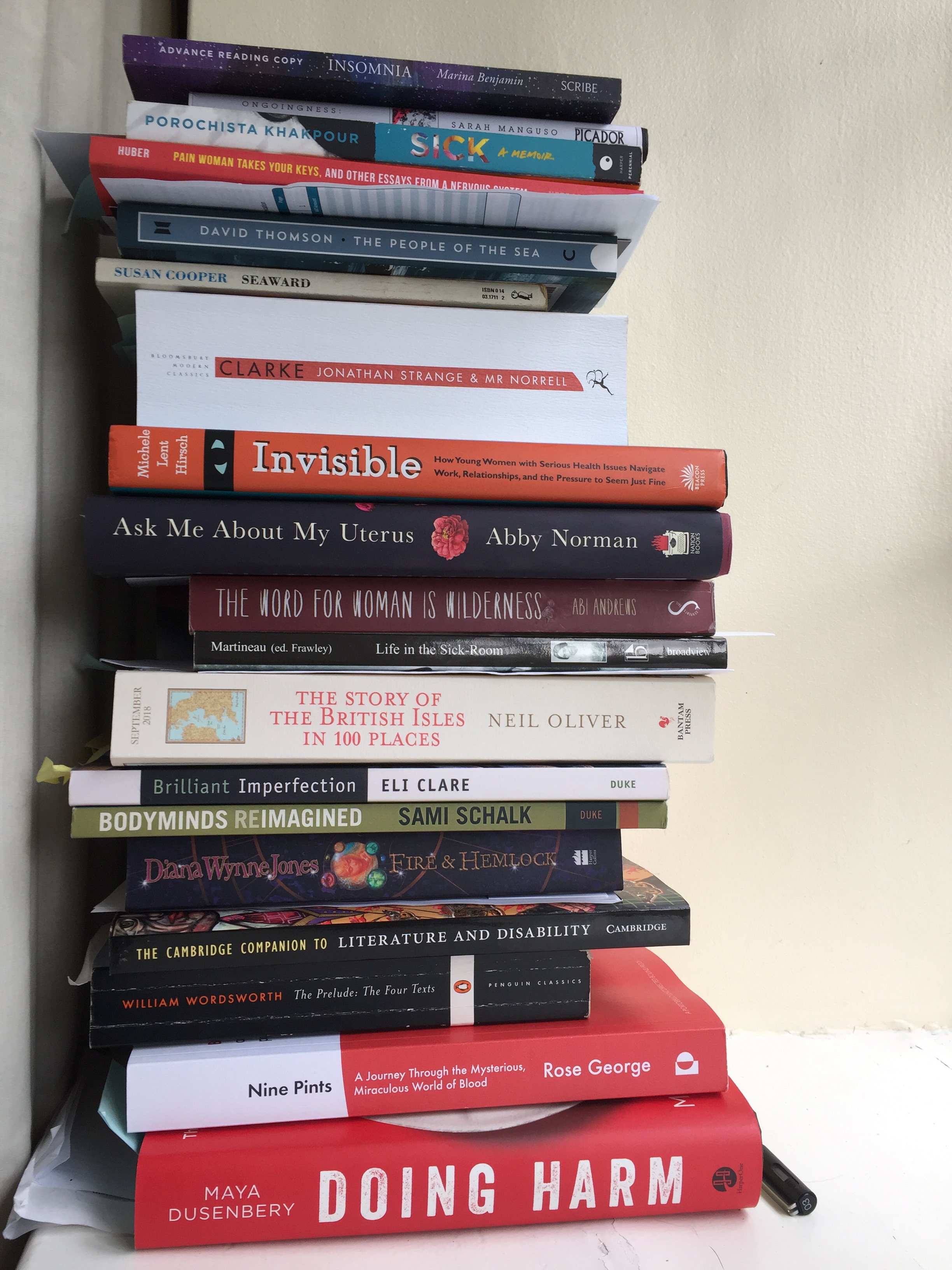
NB: citation is not endorsement (Neil Oliver, I’m looking at you!)
Some of my feelings about citation come from the academic background for my writing, but probably not quite in the way you might suppose. From 2006 – 2010, I did a funded interdisciplinary phd, shared between English Literature and Sociology at Lancaster University, in collaboration with The Wordsworth Trust, which was the subject of my work. My phd was about the history of Dove Cottage and of Grasmere, looking at how it became the place it had become, tracing changes from 1799-2010 when I submitted. My research was unusual at the time – hybrid, interdisciplinary. It looked at the history of tourism and tourism studies as well as literary, cultural and social history, and contemporary writing and art.
I’m the first person in my family to do a phd and none of us really knew what to expect. Before that, I did a self-funded MA in Creative Writing at Royal Holloway, whilst working two part-time jobs – one in a primary school as an SEN TA, one as a teaching assistant on undergraduate courses at Queen Mary, where I’d done my degree a few years before. In fact, it was the professor who asked me to teach on her course who also suggested a creative writing MA to me. I’d been edging towards further study, but not really known how or where to start.
When I was doing my undergraduate degree, I didn’t really know how to use secondary sources properly. I was scared of the library, and it’s vast unintelligible systems, which made more sense when I got a diagnosis of dyslexia and dyscalculia in my second year. I was helped enormously by a dyslexia tutor, who taught me essay structure in a way I’d never understood before, and gave me the courage to work out how to find the texts I needed. By my third year I’d begun to learn how to support my arguments by turning to others, not just literary texts, but theory, in a way that would be essential later.
A friend in another department got pulled up for unintentional plagiarism. I was thrown back to primary school, a classmate being caught out copying one of Aesop’s fables but changing the animal instead of making up her own, which had been the homework. The teacher’s fury and the humiliation, so total.
By the time I was working on my phd, it had been instilled in me that citation was foundational. You had to know the work that had been done on your area of research before you, and you had to cite it, whether to agree and build on it, or argue with it. If someone else had written on the exact thing you were writing on, you absolutely had to cite them. To not do so was both sloppy and suspicious.
As a budding academic should, I gave a lot of conference papers, and published two chapters in editions before I submitted my thesis. I applied for endless jobs and began work to turn my thesis into a monograph whilst doing hourly-paid teaching and mentoring. Then I experienced a succession of what I’ll politely call un-citational practice from other academics, both early-career and established. I was so dispirited by the second time, I stopped applying for Romanticism jobs. To have acknowledgement instead of erasure would have helped so much at that critical time. Maybe I would have ended up in a different kind of job situation where I could have had the space and energy to finish my monograph as well as teaching. Maybe I would have lasted longer in academia before realising it was incompatible with managing my conditions, but that didn’t happen. I realised recently you can read my thesis online now if you have access (though it is full of things I would update now that I know much more about them than I did 16 years ago and have tried to correct in other ways since, such as who Edmund Lee was, and what happened to Dove Cottage between the 1830s and 1880s).
These experiences made it doubly important to me to give recognition in my published work to the writers who have contributed to my writing and the thinking behind it.
When I was writing Swimming the Seasons I realised quickly the brevity of the book was creating a different kind of nonfiction than my longer booked allowed – one that didn’t leave room for citation. So I decided to include some recommended reading at the back, and some of my favourite quotes about swimming and/or lakes and rivers between each chapter, tiny extracts from writing by Alycia Pirmohamed, Leila Chatti, Rose Macaulay, Henry David Thoreau, L.M.Montgomery, Elizabeth-Jane Burnett, Al Alvarez, Jessica J. Lee, Clare Shaw, Leanne Shapton, Emily Hasler, Nina Mingya Powles, Bonnie Tsui, Leanne Betasamosake Simpson.
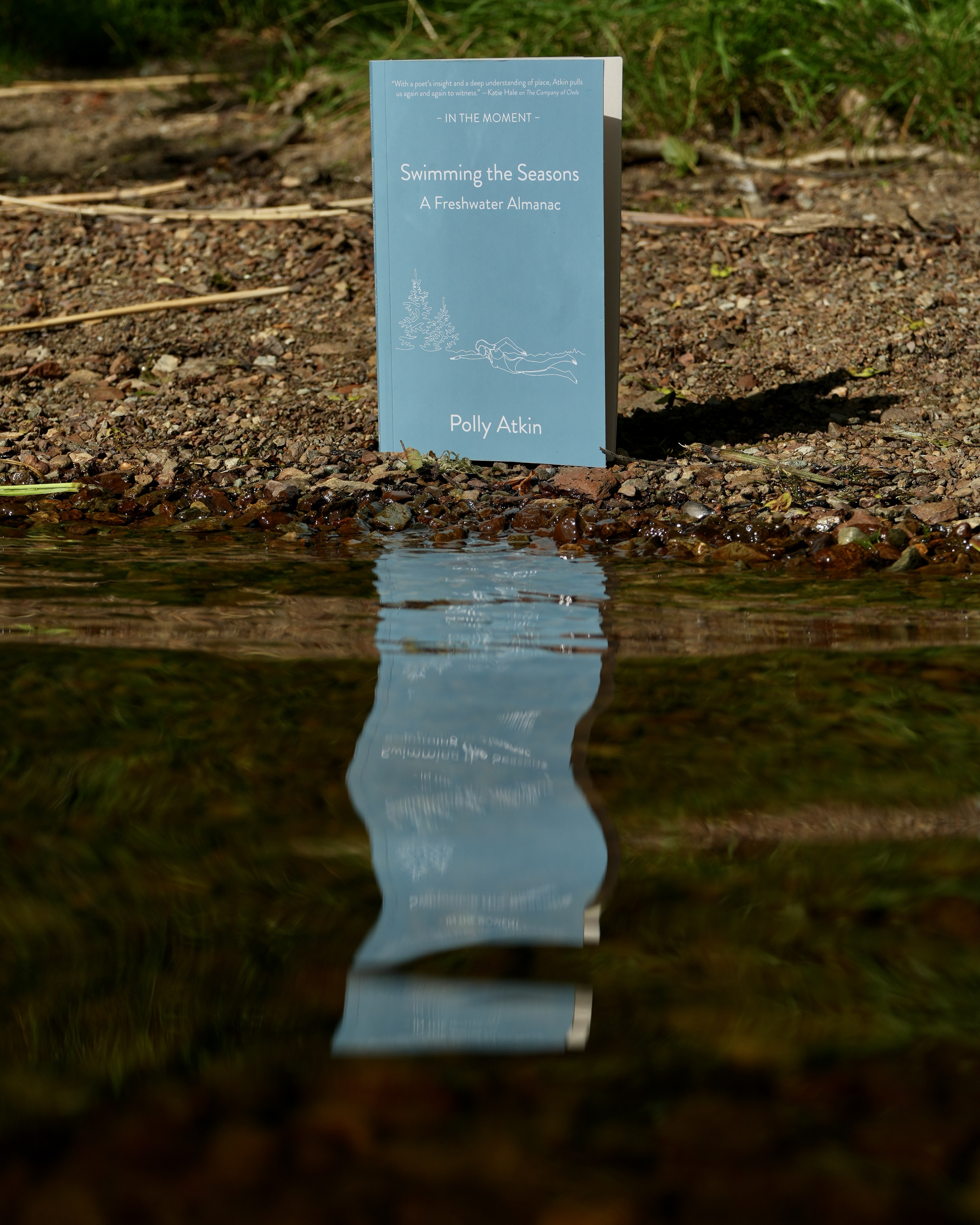
I was kindly permitted to quote from all but one of the living writers without having to pay for rights, which made it possible to include these other perspectives, as my advance for this little book was also little. I balked at paying a third of it to quote 19 words from Mary Oliver, who, being dead, does not need my money. I replaced the extract from her poem with a quote from Bethany Handley’s book My Body is a Meadow, which I’d just read in proof.
The reading list is in three parts: guides (Ella Foote, Kate Rew, Simon Griffiths and Suzanna Cruickshank), nonfiction books that centre swimming, and books about bodies of water more generally that I’ve found enhanced my outdoor swimming. These lists are far from comprehensive, miss some books other people may think of as essential, but are rather my personal favourites or ones I would recommend to customers. My logic was this: you don’t need to be told to read Roger Deakin’s Waterlog but maybe you do need to be told to read Turning or Small Bodies of Water (which customers in our bookshop quite often are!). This is the middle of the three lists, which I’d loosely categorise as Swimlit:
Swims by Elizabeth Jane Burnett (Penned in the Margins, 2017)
Turning by Jessica J. Lee (Virago, 2017)
Why We Swim by Bonnie Tsui (Rider, 2021)
Swimming Studies by Leanne Shapton (Particular Books, 2012)
The Tidal Year by Freya Bromley (Coronet, 2023)
At the Pond: Swimming at the Hampstead Ladies’ Pond, various (Daunt, 2019)
By the River: Essays from the Water’s Edge, various (Daunt, 2024)
Swimming With Seals by Victoria Whitworth (Apollo, 2021)
Small Bodies of Water by Nina Mingya Powles (Canongate, 2022)
The Outrun by Amy Liptrot (Canongate, 2015)
The Apothecary by the Sea by Victoria Bennett (Elliott and Thompson, 2026)
Shorelines by Alycia Pirmohamed (Canongate, 2026)
My Body is a Meadow by Bethany Handley (Headline, 2026)
I think we have a culture of popular nonfiction in this country that too often says no notes, that says NO MORE DE QUINCEY!, that too often encourages writers to actively not cite or even acknowledge their predecessors, as though it might take away from their own originality. But none of us form an idea in vacuum. There is room for us all to co-exist and support each other, if we are willing. To me, citing our peers in particular is incredibly important, especially if they’ve helped us form our ideas. Especially if because of who or how they are, their ideas are more likely to be erased by a system hostile to their voices and knowledge – both in the present, and over time.
If we can’t name our influences in the main text or in notes, there are always the acknowledgements themselves, which give us another chance to say ‘this person’s work helped form this work’. I always panic I’m going to miss someone or something really important out of my acknowledgements, and I’m sure every time I have. But again, it’s a space that’s made for sharing what’s enabled the work to come into being, whether that’s support from your cat, or the work of other writers. The least we can do is try.
I’m so used to not being cited that it surprises me now when I am.
I was really moved recently to get a message from a friend asking if I’d read Lorraine Boissoneault’s Body Weather: Notes on Chronic Illness in the Anthropocene, thinking I’d love it. I’d not managed to read it yet though had been looking forward to it since I first heard of it. Later the same day they sent me a follow up – Boissoneault quotes my essay from Moving Mountains (edited by Louise Kenward). A little earlier in the summer, I’d realised David Turner cites Recovering Dorothy in his Disability: A History of Resistance when writing about victorian sickrooms. Last month, I blushed behind my filtering face mask to sit in a conference paper and find Recovering Dorothy praised for bringing the speaker to a new line of inquiry.
It means more than it probably should to me to find my work acknowledged like this, and also more than it should when I don’t. It’s not helpful to dwell on the latter. There are so many reasons work might not be acknowledged, from plain forgetfulness to the reasons the worst bits of me always fear (they hate me and want to eat me and steal my life at the same time! UNLIKELY).
I know, practically, we can’t name all of our influences all the time. There just isn’t space, time, or energy. But I do think it’s important when we can do to acknowledge those who have added essential layers of thinking to our own; who have led us to discoveries or frameworks we might not have considered; who have led us to whole new ways of understanding.
I try to do it, and no doubt I fail, again and again. I failed, for example, in my latest poetry collection, when neither I nor my editor noticed that in a list of last names I’d used one poet’s first name only (I hope to correct that in later editions).
But I do try, and will keep trying, because I believe it is work that matters. I believe it is essential to the wider work, and to supporting a thriving writing ecosystem as a whole. I hope the work of others I cite in my work can lead readers to new discoveries just as those writers have led me to them. Amazing things happen when art is in conversation with other art, when we work together rather than pushing each other out.
Two of the things I made last year that pleased me most were collaborations – the essay I wrote with Sally Huband for The Book of Bogs (edited by Clare Shaw and Anna Chilvers), and a project with Annie Rutherford and Anneke Lubkowitz which responded to the work and lives of Dorothy Wordsworth and Annette von Droste-Hülshoff.
Citation too is a form of working together, even if it’s a one-way message. It can be passed on, and on, and on. Citation is memory, but it’s also the transmission of that memory – a kind of seedbank, from which new thinking can grow any time it’s given light and water. I want to do that in my work. I want to pass something on into future hands that can turn into something living far beyond me. Citation is belief in a future. I believe in that future, and that it’s full of disabled writing and writers that haven’t been forgotten.

