What will be found in England’s lost corner?

IMG_5847

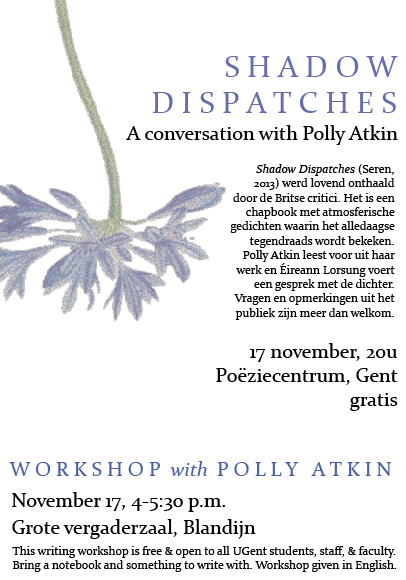
Tomorrow I’m making the excessively convoluted journey from Cumbria to Norfolk, for the Cafe Writers Poetry Prize reading. The night before New Year’s Eve I got the news my poem ‘Tiny Glass Horses’ had been placed third, with first prize going to Jonathan Davidson’s paean to ‘Brickwork’, and second to Jo Bell’s take on A Natural History of Selborne, ‘A Nightingale for Gilbert White, April 5, 1768’.  It was great to go into the new year with this news, and knowing my lucky streak, or whatever you might call it, wasn’t quite over.

So I realised this will be the first time I’ve done a poetry reading in East Anglia. It’s been a decade, I think, since I’ve been to Norwich (not because I’ve been living with an Ipswich supporter for the latter half of it – mostly just because of the difficulty in getting there from these far reaches of the North-West). This means I haven’t been to Norfolk since I first read Kazuo Ishiguro’s Never Let Me Go, in which Norfolk is figured, quite compellingly, as ‘England’s lost corner’. I always think of this now when I think of Norfolk, especially when I’m trying to get there via the train network, with it’s refusal of east <–> west:

‘You see, because [Norfolk is] stuck out here on the east, on this hump jutting into the sea, it’s not on the way to anywhere. People going north and south, they bypass it altogether. For that reason, it’s a peaceful corner of England, rather nice. But it’s also something of a lost corner.’

Someone claimed after the lesson that Miss Emily had said Norfolk was England’s ‘lost corner’ because that was were all the lost property found in the country ended up.

Ruth said one evening, looking out at the sunset, that ‘when we lost something precious, and we’d looked and looked and still couldn’t find it, then we didn’t have to be completely heartbroken. We still had that last bit of comfort, thinking one day, when we were grown up, and we were free to travel the country, we could always go and find it again in Norfolk.’
Kazuo Ishiguro, Never Let Me Go

I hear great things about the writing community in Norwich and the surrounding area though so I’m looking forward to seeing a bit of it. And whatever I’ve lost that might reappear. Unfortunately David Morley, who judged the competition, can’t be there because of work commitments, but that does mean there’ll be a decent hearing from the winning and commended poets who can make it.

The next day is the first of my appointments with one of the specialist clinics I’m being sent to to try and help limit the Ehlers Danlos Syndrome damage. This one is for the autonomic problems that come along with it, which are some of the hardest things to deal with on a daily basis. Hopefully the poetry will take my mind off the appointment, and vice versa …

The reading starts at 7.30pm, at Take 5, 17 Tombland, Norwich in the upstairs function room.

The Old Year is Dead

IMG_65722014 seems to have been a year of upheaval and uprising, of extreme highs and lows, tragedies and atrocities, of revelations great and terrible. Natural and/or man-made disasters dominated local and global news. Planes fell from the skies, flood-waters rose, diseases flourished, people around the world were killed for being who they were where they were (students; black men; female; indigenous women; transexual; disabled …). Governments and government agencies were revealed as complicit in crimes against their own people, as well as others. Those in power were revealed as abusing that power. It sometimes seems that each year brings an escalation of violence and intolerance. Does it end? Is this sense of escalation an illusion? Is this how it has always been and always will be? Does it come to a head and subside? Do we learn to live better, with the world, and each other?

My own year has been a peculiar mix of surprising successes, big changes and ongoing difficulties.

Looking at it in terms of what might be termed ‘worldly success’, this has been the best year I’ve ever had.

I started my first full-time academic job in September.
I was granted funding for a Knowledge Exchange project.
I had a great time judging the first Wordpool Poetry Competition, and was delighted to see the winning poem turned into an animation in the Blackpool illuminations.
I won the Wigtown Poetry Prize (with ‘A Short History of the Moon’), the Andrew Waterhouse Prize for Poetry in the Northern Writers’ Awards, third prize in the Poets and Players Competition (for ‘Causeway’), third prize in the Battered Moons Competition (for ‘Heron/Snow’), and was commended in the Hippocrates Prize (for ‘The Test’).
My pamphlet was shortlisted for the Lakeland Book of the Year.

At times this has seemed implausible to me. When I had to turn down appearing at the Battered Moons Awards event at the Swindon Poetry Festival, because it was on the same day as the Wigtown Festival Awards Event, which I had already agreed to be at, I really started to question how this had all arrived at once. I’ve been struggling so much for so long, in so many areas of my life, I didn’t really know how to stop struggling and bask in these moments.

Behind each of these public successes are the picked-over bones of countless private failures. This should go without saying, but it seems too easy to forget how much we don’t see of each others’ lives in this age of social media. There were dozens of jobs I didn’t get; schemes I was rejected for; poems nobody seems to have wanted. I’ve been thinking a lot about this this year, and what it means to really succeed on one’s own terms. Sometimes rejections arrive at the same time as acceptances, and you don’t know how to feel. Sometimes all the seeming successes in the world don’t appear to move you forward, and you can’t work out what is blocking your progression or how you could do anything differently. Sometimes it seems that just being you is what is blocking your progression. Sometimes you may convince yourself that there is One Thing that will change your stars. Eileen Pun and I call this the Monkey Island Hypothesis – that you can do all that is necessary in any order, but if you miss one vital component you will never get to the next level. It’s hard to escape that feeling that you’re falling behind, or under.

As I’ve written before, whenever I feel like that, I remind myself that the work itself is the most important thing. It doesn’t matter if – like some of the poems that have done well for me this year – no one else appreciates that work for years. There’s a kind of pact you make with the work you do.
IMG_6634

The last few years have been very hard for me, in various ways. I’ve had very little income, and what I have had has been very insecure. I have suffered a lot with poor health. I’ve been in constant pain. I’ve been perpetually exhausted, in a way which is hard to explain to a healthy person.

In April I finally discovered that the devastating abdominal pain I’d been living with since November 2012 was a mixture of inflammation of my rib cage, and a broken rib. Through my own persistence, and the persistence and support of my GP and local physiotherapist, I was diagnosed, in October, with Ehlers Danlos Sydrome (EDS). I was also diagnosed with Postural Tachycardia Syndrome (PoTS), which is secondary to the Ehlers Danlos Syndrome, and elements of Marfanoid body habitus. Life in my body, my peculiar body, is beginning to make sense in a way it never has before.

I had to travel down to London and pay to see an expert to get this diagnosis (which effects not only me, but my whole family, as EDS is hereditary). I’m now waiting to go to various clinics which should help me manage some of the symptoms. The diagnosis is both a tremendous relief (to know what it is, and what it is not; to know better how to help and what harms) and a peculiar burden (it is me, or I am it). I am still adjusting to knowing that I have to accept this difference, and its permanence, and all the consequences of that. ‘Normal’ is a lost concept. I will probably always be in some degree of pain. I will injure myself doing ‘ordinary’ things. I will always get more tired than an ‘ordinary’ person does from the same activities. I might never be able to stand still for more than a few moments without getting dizzy and numb and sick, as all the blood in my body sinks away from my head and my brain, and can’t pump itself back up through my too-elastic vessels. My main task for 2015 will be to learn to live with this, in and with my body, now we can see each other for what we are.

I am already learning not to feel guilty about prioritising the things I need to do to do the things I’ve agreed to do (sleep as much as possible; swim as often as possible; don’t be afraid of the judgement of others at the times these are all you can do). Some of you may be familiar with ‘Spoon Theory’. Most days for me at the moment, there is no spoon. I am concentrating on bringing some into being.
IMG_2467

So 2014 for me has been a year in which things have come to pass I hardly thought possible. People I’ve never met have read and enjoyed my poetry. People I greatly admire have read and rated my poetry. I have a steady income going forward for a reasonably steady period. Moreover, I have been given the key to unlocking central mysteries of my own life, and those of my family.

There’s a lot of things I feel I’ve been failing at though. I don’t see my friends enough. I don’t even contact my friends enough. I’m behind with all kinds of writing and behind with all kinds of reading. I don’t get to as many events as I’d like to, and I sleep through a lot of life. Most of the time, I’m barely keeping nose above surface.

I’m going into 2015 with some fear and trepidation (and a persistent chest infection), but also more genuine hope than I’ve been able to admit to for a long time. I’ll do what I can on my part – concentrate on what I believe matters most – and hope – keep hoping – that this concentration matters. I hope for the same for all of you. For your wishes and work to matter. For your wishes to work.

I wrote this poem, ‘Forecast’, on New Year’s Day 2013. In February last year it was engraved on a window of the Globe Inn in Dumfries, another fabulous event in my poetry year, that I have previously written about here. I knew when I wrote it something was shifting, but it took so long, so long to manifest as material change. This New Year’s Day, it hasn’t stopped raining, and all bodies in the house slept peacefully into the dark afternoon. Despite that, I think the forecast works as well today.

Forecast

Last night the barometer predicted CHANGE
the stormy tail of the year passing over.
Midnight threw up stars and a 2/3
moon, scattered as hailstones after.

New year’s day sailed in as a fringe
of spring on a sculling cloud, word
from an unseen sun, blue displacing
blank, as from a vacuum chamber.

One swift shower. One magpie etching
spirals in the lightening air. Now
its partner, binary tail declaring
the arrow’s twitch to Fair.


The Old Year is dead. Long live the New Year.
IMG_6641

What Would Wordsworth Do/Walking With Wordsworth Daily

White Moss in Bluebell Season

When I first came to Grasmere, or rather, to Town End, as a volunteer at the Wordsworth Trust, the other young volunteers had been busy asking themselves ‘What Would Wordsworth Do?’ and meditating on the practice of ‘Walking with Wordsworth Daily.’ These became things I often thought on, especially on those short dark Winter afternoons of my High Sykeside attic-life. Sometimes the meditation did not reach far enough and I had to ask myself ‘What Would Dorothy Wordsworth Do?’ or even, sometimes, ‘What Would John Wordsworth Do?’ (but only at my very darkest moments, as we all know how that goes).

I regret I have been asking myself these questions (or certainly the first two) with increased frequency in the last year as I have, with many other baffled residents, watched Go Lakes and the Lake District National Park Authority push through plans to ‘improve’ the area around Rydal and Grasmere. Improve, you say? That sounds marvellous!

I wish I could share with you the earliest projections of the huge boulder wall they were wishing to build along the beach at Grasmere to run the cycle-path along, but we were told they would take legal proceedings against us if we did, so I’m afraid you’ll just have to imagine it. It looked something like the cob at Lyme Regis, wedged between the turf and the shingle beach at the south end of the lake. Delightful!

P1020096


Most of these plans have already been carried out, because clearly they were going to spend their EU money as they wished to, regardless of any opposition. You can trace a partial (very partial) history of the developments through some classic Westmorland Gazette Stories, such as this. Earlier in the planning stages, a new bus stop and crossing at White Moss Common had been included but these plans were scratched. I thought.

'poorly defined paths'
‘poorly defined paths’

This week I realised with they had actually been superseded by plans for even more improvements! These include trebling the size of the toilet block, and basically turning White Moss – common land – into a heavily urbanised visitor centre, akin to Brockhole.

In my consternation I rushed down to White Moss, which, connecting the lakes of Rydal Water and Grasmere along the river offers some of the most lovely low level walking in this area, in order to hug a, or several, trees. This, I thought, is what Dorothy Wordsworth would do. I was just about to lie down in a ditch to imagine myself dead, when I spotted this poem pinned to a sturdy beech tree.

ON THE PROJECTED WHITE MOSS COMMON ‘HUB’

IS then no nook of English ground secure
from rash assault? Schemes of free outings sown
on common ground, on ancient paths kept pure,
as when their flowers of hope were bulldozed down
for ‘improvements’;–how can they now endure?
And must we too the ruthless change bemoan
who scorn this false utilitarian lure
of cafes in green fields at random thrown?
Baffle the threat of ‘world class’ toilet sheds
with guileless welcome to each rapturous glance:
plead for thy peace, for remaining unenhanced
and lovely; and, if human hearts be dead,
speak, passing winds; or twitter, with your strong
and constant voice, protest against the wrong.

November 3, 2014.

The Wordsworthians amongst my readers may recognise its similarities (and differences) to Wordsworth’s most famous protest poem:

ON THE PROJECTED KENDAL AND WINDERMERE RAILWAY

IS then no nook of English ground secure
From rash assault? Schemes of retirement sown
In youth, and ‘mid the busy world kept pure
As when their earliest flowers of hope were blown,
Must perish;–how can they this blight endure?
And must he too the ruthless change bemoan
Who scorns a false utilitarian lure
‘Mid his paternal fields at random thrown?
Baffle the threat, bright Scene, from Orresthead
Given to the pausing traveller’s rapturous glance:
Plead for thy peace, thou beautiful romance
Of nature; and, if human hearts be dead,
Speak, passing winds; ye torrents, with your strong
And constant voice, protest against the wrong.

October 12, 1844.


Some concerned parties might encourage you to write to the planners to express yourself in sensible prose. The kind which can’t be accused of hysteria, sentimentality or NIMBYism.

I found such a lucid statement nailed to the door of the toilet block. It read as follows:

Please find below comments on the proposed enhanced-mega-toilet-experience in White Moss.

I had assumed this planning application would not be recommended for approval as it is too close to a GCSE Geography case study on why we have a long history of conservation movements. If this goes ahead, the National Park can no longer suggest it ‘balances’, ‘enhances’ or indeed ‘protects’ the uniqueness of the area. The recent Lake District National Park Management Plan suggests a wish to protect ‘harmony’ of the environment. Does anyone at the LDNPA or the Lowther Estate know what this is?

Any extension to a toilet block which is a new shop and a café is a money-making venture. Calling it a Hub is a way to avoid the unfashionable and under-supported Tourist Information Centres that are continually disappearing. If the toilet cannot be adequately funded then let the parish council take control of it.

The character and the quality of the environment would be affected by this development. That the development committee report thinks otherwise illustrates the inability to recognise environmental value. The appearance of a large glass building and some tarmac will also not help ‘describe’ the area to visitors. If it is not unified, this is because it is a complex environment of overlapping cultural landscapes and not a modernist homogenous utopia.

An extension to the toilet block should not be 3.3 times the size of the initial building. It is not simply “convention” that suggests otherwise, but a blatant illustration that this change of visitor service is a badly disguised, wholly new development. Those currently using the toilet are probably not thinking of craft workshops to improve their experience. Perhaps we might also move Dove Cottage to White Moss to extend the toilet? It would also enhance the visitor experience within the car park?

It is unclear from any of the supporting materials for this application that anyone proposing this development understands what the word sustainable means. The perception that this area needs to change is stronger than the need for change.

For some tasks, prose however is not enough.

How did these scraps come to be at White Moss Common? When will one or other of them be reconstructed as a brass plaque and nailed to a rock at the site of its discovery?

Is the Great Sage with us still?

Does the ghost of Wordsworth haunt these woods now as he haunted them in the early years of the nineteenth century? And possibly all the time between then and now?

More importantly, can he save us again?


EDIT: In a rare moment of planning righteousness, the ‘Hub’ was turned down 12-2 on 5th November. I imagine the protests detailed above were the deciding factors.

White Moss Common on a Frosty Winter Afternoon

Equinoctial

 It’s just that time of year when we push ourselves ahead, we push ourselves ahead.

(Dar Williams, ‘The End of the Summer’)

IMG_2954

Autumn equinox will be reached in the early hours of Tuesday 23rd September. 2.29 am GMT. A good point from which to reconsider both the season past, and the season arriving.

I’m travelling up to Glasgow every week now for my new lectureship at the University of Strathclyde, and I’m full of that peculiar mixture of excitement and sadness a new term in a new place always seems to bring.

The next major event in my poetry calendar is the Wordpool Poetry Prize Awards Ceremony on National Poetry Day (Thursday October 2nd) as part of a day of poetry events Wordpool are hosting. After the winners and commended poems are announced, and we hear the poems, a coach will take everyone round to the site of the poetry illumination, and the winner will switch it on. An animated film of the winning poem is being made, along with the illumination, and I can’t wait to see what the artists have created. I’m pretty excited The Doctor has touched that switch, in two different regenerations. As David Tennant noted when he switched the illuminations on in ’07, ‘Red Rum once did this with his hoof’. It’s not often poets get a chance to stand alongside timelords and race horses in any listing, so this will be rather special.

IMG_2987_2